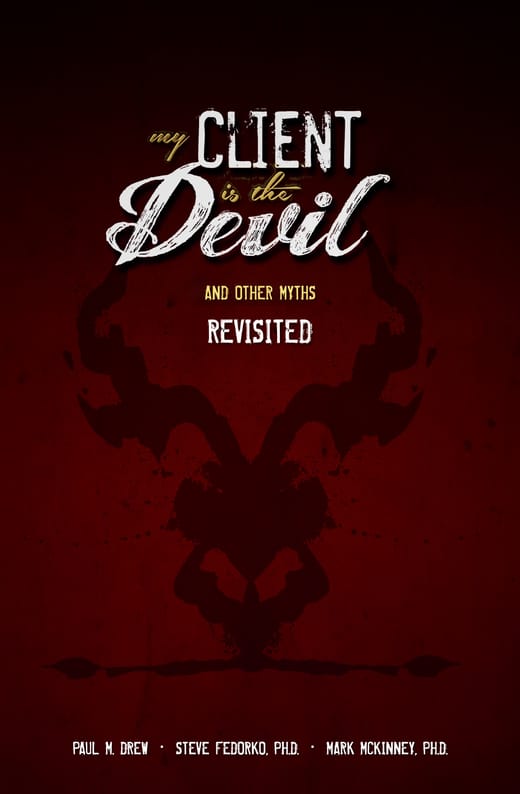
Thrive, not just survive.
The psychology of better client relationships. It leaves aside the techniques for making a client happy and works on the person managing the client, so you stay steady, clear, and effective. Written for anyone who wears the Account Lead hat.
The clients are still difficult, and the fundamentals still apply. What changed is everything around the job, and it arrived from directions the 2015 edition could not have anticipated.
Remote work went from a fringe arrangement to a near-universal condition, almost overnight. It is easy to tell yourself stories about your own competence when you are physically disconnected and working dawn to dusk.
Collaborators spread across time zones, cultures, and communication styles that ask for a different kind of emotional fluency than most of us were trained for.
The gig economy blurred the lines of accountability, loyalty, and team cohesion. Who is actually on your team has become a harder question than it used to be.
AI stopped being a future consideration and became a present-tense disruptor. It changed what work looks like, who does it, and what is expected of the people managing those relationships.
No hallway conversations to absorb culture. No lunch where mentorship happens sideways. A whole generation is entering client work without the informal architecture earlier ones took for granted.
Behind every negative self-talk is a belief that may not be true. Fifteen of them run client-facing careers from the background, and "the devil you know" assumes there must be a devil.
Three sections that build on one another. Confidence helps you manage yourself. Collaboration helps you work effectively with others. Creativity helps you expand what is possible for the client, the team, and the work itself. Beginning opens the book, and Commencement sends you out.
What happens inside you. Manage your own emotions, steady your thinking, and build the inner resilience that helps you work well under pressure, no matter if the client really does seem like the devil.
What happens between you and everyone else. Whether your team is down the hall or spread across three continents, clear communication is still the engine of every client relationship.
What becomes possible. The Account Lead who never stops learning and never misses a chance to help others grow. Practical habits like mindfulness, resilience, and reflective thinking that keep you sharp when the pressure is on.
A strong Account Lead does more than fix today's issue. They improve how the client thinks, how the team works, and what everyone believes is possible next. Those are the people who get invited back.
Behind the negative self-talk is a set of beliefs that may not be true. The book names fifteen and groups them by what each one is trying to protect you from, then pairs every myth with the reality that replaces it.
These myths tie your value as a person to how flawlessly or constantly you perform.
These myths tell you that you must keep everyone happy, never show weakness, and always defer to others in order to stay safe.
These myths suggest that life should always reward good behavior and that you are stuck when it does not.
These myths promise that being seen and constantly busy is the same as being effective.
The Stoic writers said every situation has two handles, and you choose which one to hold. When you recognize a myth that sounds like your own self-talk, you are being offered a different handle.
“Client-service work has changed more in the last 5 years than in the twenty before that. Remote work and AI have made the only durable advantage the human one: how you think, how you show up, the story you tell yourself about the client. This book is an essential field manual for anyone who serves a client, told through real client-service stories in a docudrama style — easy to read, and usable the same day.”
“As both a former client of Paul Drew and a digital executive who has spent decades leading complex transformations, I immediately recognized the people, pressures, and relationship challenges in this book. My Client Is the Devil, Revisited is a practical guide to managing ourselves when the work, technology, and people around us become difficult. Its combination of psychology, candor, humor, and real-world tools makes it an invaluable field guide for anyone responsible for clients, teams, or outcomes they cannot completely control.”
“What if you could spot client-related problems faster, grow your clients faster, and reduce your churn? If that sounds good, read this book. The practical advice Mark and Steve share will save you time and money and, equally important, you'll find your job more rewarding.”
“Forget managing the client. Start with managing yourself! Packed with challenging situations that you will undoubtedly recognize from your own work with clients, Drs. Fedorko and McKinney share proven skills and techniques that you can start using now to help you succeed.”
“The lessons in this book are pure genius... told through entertaining examples that will strike a chord with anyone who has served in a professional services setting. The practical tips have personally helped me to partner better with clients, deal with challenging situations and enjoy every moment along the way.”
“The workshop based on My Client is the Devil provided a proven platform to help our employees better understand themselves, each other, and our clients. We saw an immediate impact throughout the organization. This is one of those unique training experiences that is of equal benefit to both the employee and the company.”
Two psychologists and one founder, with decades in the trenches alongside account leads, consultants, and teams, watching what works, what fails, and why brilliant people burn out.
Launching October 12, 2026. Preorder now and be first in line.
All three editions are available to preorder now and arrive October 12, 2026. Preorder at Amazon's guaranteed lowest price between now and release day.
Preorders are fulfilled by Amazon. Prices are set by the retailer and may vary.
Get updates on new tools, stories from the field, and resources for people living in the client-facing trenches. No spam. No fluffy "inspiration." Just useful stuff.
Anyone who wears the Account Lead hat. The examples come from technology, consulting, cybersecurity, software, and marketing, but the authors are explicit about the reach: lawyers and architects, engineers and CPAs, salespeople and project managers. If you are responsible to another person for outcomes you do not fully control, this is written for you.
The core framework did not change. What changed is the world it has to operate in. This edition adds Relationship Capital, four Modern Work myths including one about AI, new chapters on remote work and the gig economy, a chapter on protecting your attention from the tools, and a 60-page field-guide appendix. Paul M. Drew joined the original authors after a decade of using the book inside seven companies.
It is both. Every chapter opens on a client situation that will feel uncomfortably familiar, like the Martin meeting, Joe's calendar, or the CIO who never stops asking for detail, and each one lands in tools you can use on your next call. The appendix then collects the tools in one place.
It was rewritten for one. Chapter 2, Work from Roam, is about exactly that. Chapter 10 covers teams spread across time zones and cultures, and the Visibility and Multitasking myths are the ones remote work makes loudest.
It is planned. The book carries an audio ISBN, and the authors are targeting a release after the print and ebook editions land. Join the list and you will hear about it first.
Reach out. The authors want this to be the dog-eared, highlighted book you keep close. If it completely misses for you, they will make it right.
What separates "my client is the devil" from "this is actually working" comes down to confidence, collaboration, and creativity. All three of them can be learned.